A hair transplant is a popular treatment for people experiencing hair loss and thinning. While the procedure itself is an important step, understanding the hair transplant recovery timeline is equally important for achieving the best possible results.
Recovery is gradual, and the appearance of the transplanted area can change significantly during the first few weeks and months. Knowing what to expect can help patients follow proper aftercare and avoid unnecessary concerns.
What to Expect Immediately After a Hair Transplant
Immediately after the procedure, the scalp may have some redness, mild swelling, tenderness, or small crusts around the transplanted follicles. These effects are generally part of the normal healing process.
Your surgeon will provide specific instructions regarding washing the scalp, sleeping position, medications, and activities to avoid.
Hair Transplant Recovery: Week-by-Week
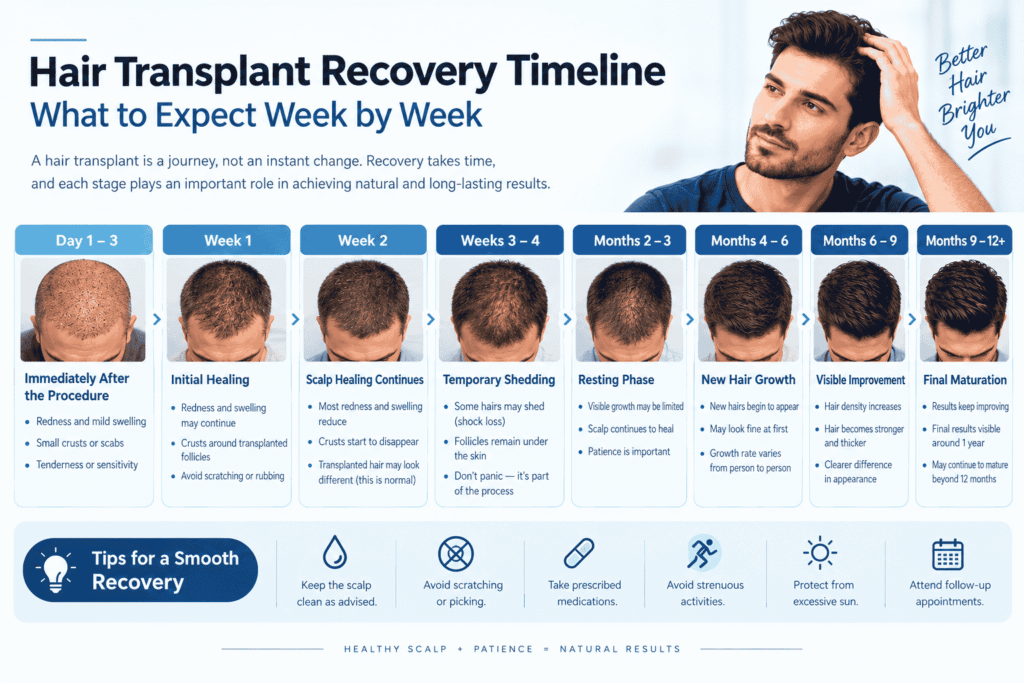
Week 1: Initial Healing
The first week is focused mainly on healing.
You may notice:
- Redness and mild swelling
- Small scabs or crusts around transplanted follicles
- Mild sensitivity or discomfort
- Temporary changes in the appearance of the scalp
It is important to follow your surgeon’s instructions carefully. Avoid scratching, rubbing, or unnecessarily touching the transplanted area.
Week 2: Scalp Healing Continues
By the second week, much of the initial redness and swelling may begin to settle.
The small crusts generally start to disappear as the scalp continues healing. Some patients may feel that the transplanted hair looks different from what they expected at this stage.
This is normal because the final growth process has not started yet.
Weeks 3–4: Temporary Hair Shedding
During this period, some transplanted hairs may shed.
This temporary shedding is commonly known as shock loss or shedding phase. It does not necessarily mean that the hair follicles have been lost.
The transplanted follicles can remain beneath the skin while they enter a resting phase before producing new hair.
Months 2–3: The Resting Phase
The second and third months can sometimes feel like a slow stage because visible hair growth may still be limited.
The scalp continues to recover, while transplanted follicles gradually move toward the next growth phase.
Patience is important because hair growth does not happen overnight.
Months 4–6: New Hair Growth
Between approximately four and six months, many patients begin noticing new hair growth.
The new hairs may initially appear fine or thin. Over time, they can gradually become stronger and more noticeable.
The exact rate of growth varies from person to person.
Months 6–9: Visible Improvement
During this stage, hair density and coverage may continue improving.
The transplanted hair generally becomes more noticeable as individual strands mature. Patients may begin seeing a clearer difference compared with the earlier stages of recovery.
Months 9–12 and Beyond: Continued Maturation
Hair transplant results continue developing over time.
For some patients, significant improvement may be visible by around one year, while further maturation can continue beyond this point. The final timeline depends on factors such as the patient’s individual hair-growth cycle, technique used, number of grafts, and overall health.
Tips for a Smooth Hair Transplant Recovery
Following your surgeon’s aftercare instructions is one of the most important parts of recovery.
Some general considerations include:
- Keep the scalp clean according to your surgeon’s instructions.
- Avoid scratching or picking at the scalp.
- Follow prescribed medications exactly as directed.
- Avoid strenuous activities until your surgeon says they are safe.
- Protect the scalp from excessive sun exposure.
- Attend recommended follow-up appointments.
- Contact your medical team if you notice unusual symptoms or have concerns.
When Should You Contact Your Doctor?
Recovery experiences vary, so it is important to contact your surgeon if you experience symptoms that concern you or appear different from the instructions you were given.
Your surgeon can determine whether a particular symptom is part of normal healing or requires additional attention.
Frequently Asked Questions
How long does hair transplant recovery take?
The initial scalp healing generally occurs during the first few weeks, but visible hair growth takes several months. Hair transplant results continue to mature over approximately 9–12 months or longer in some patients.
When can I expect new hair growth?
New growth commonly becomes more noticeable after several months. The exact timing varies between individuals.
Is hair shedding after a transplant normal?
Temporary shedding can occur during the early months following a transplant. If you are concerned about shedding, discuss it with your hair-transplant surgeon.
When can I return to normal activities?
The timing depends on the procedure and your individual recovery. Your surgeon should advise you when exercise, strenuous activity, and other routines can safely be resumed.
Conclusion
A hair transplant recovery timeline is a gradual process rather than an immediate transformation. The first few weeks focus primarily on scalp healing, followed by a temporary shedding or resting phase and then gradual new hair growth.
Understanding each stage can help patients maintain realistic expectations and follow their surgeon’s aftercare recommendations.
If you are considering a hair transplant, consult a qualified hair-transplant specialist for an evaluation and a personalized treatment and recovery plan.