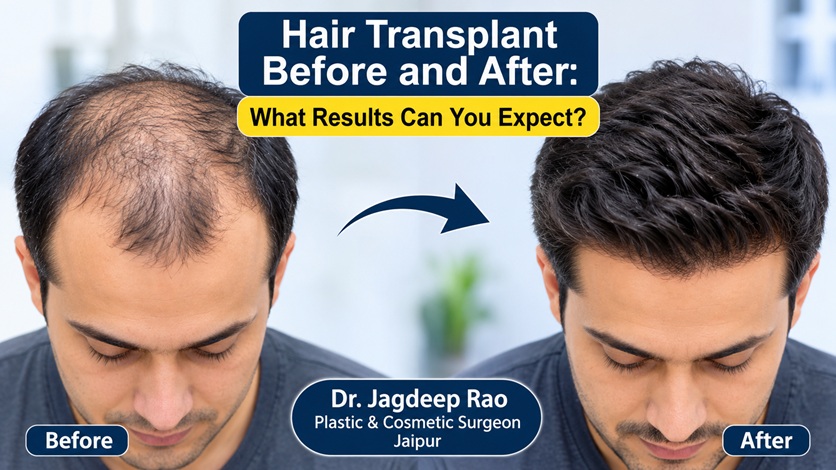
Hair Transplant Before and After results can help patients understand the possible changes in hairline, hair density, and overall hair restoration. At Dr. Jagdeep Rao’s clinic in Jaipur, patients can learn about the hair transplant recovery timeline, expected hair growth, and realistic results based on their individual hair loss condition.
Hair loss and a receding hairline can affect confidence and overall appearance. For individuals experiencing significant hair thinning or baldness, a hair transplant can be an option to restore hair in areas where hair growth has reduced. However, one of the most common questions patients ask is: What can you expect before and after a hair transplant?
Understanding the hair transplant results timeline, recovery process, hair growth stages, and realistic expectations can help you make an informed decision.
At Dr. Jagdeep Rao’s clinic in Jaipur, patients can consult about hair restoration options based on their hair loss pattern, donor hair availability, scalp condition, and individual goals.
What Does a Hair Transplant Before and After Result Show?
Hair transplant before-and-after photographs generally show changes in hairline appearance, hair density, coverage of bald areas, and overall hair restoration.
A hair transplant involves moving hair follicles from a donor area, commonly the back or sides of the scalp, to areas affected by hair loss. The transplanted follicles may continue to grow hair over time, although the outcome varies from patient to patient.
Before-and-after results can help patients understand the potential improvement, but photographs should not be considered a guarantee of identical results.
Hair Transplant Before Surgery: What to Expect
Before undergoing a hair transplant, a consultation and scalp assessment are important.
During the consultation, a surgeon may evaluate:
- Hair loss pattern and severity
- Donor area density and quality
- Scalp health
- Hairline design
- Medical history and medications
- Expected coverage and density
- Suitable hair transplant technique
The surgeon may also discuss the limitations of transplantation, possible complications, and whether additional treatment for ongoing hair loss may be recommended.
Hair Transplant After Surgery: What Happens?
After the procedure, the scalp may experience temporary redness, swelling, tenderness, scabbing, or discomfort. These symptoms generally improve as the scalp heals, although the recovery period varies.
Patients may also notice that transplanted hair shafts shed during the first few weeks. This is commonly referred to as shock loss of transplanted hair and can be part of the normal healing process.
The transplanted follicles may remain in place and begin producing new hair over the following months.
Hair Transplant Results Timeline
First 1–2 Weeks
During the first couple of weeks, small scabs may form around the transplanted grafts. Redness, mild swelling, and tenderness can occur.
Patients should follow their surgeon’s washing and aftercare instructions carefully to protect the transplanted area.
1–3 Months After Hair Transplant
Transplanted hair shafts may shed during this period. Some patients may feel that their hair looks similar to how it did before surgery.
This phase is generally temporary, and visible new growth may not yet be noticeable.
3–6 Months After Hair Transplant
New hair growth may begin to become visible in some patients. Initially, the hair may appear fine or uneven.
Hair growth and thickness develop gradually, so early results may not represent the final outcome.
6–9 Months After Hair Transplant
Hair growth and coverage may become more noticeable. The transplanted hair may gradually gain thickness and improve the appearance of the hairline or treated area.
9–12 Months and Beyond
Many patients see substantial improvement within approximately 9–12 months, while some areas, particularly the crown, may continue developing longer.
The final outcome varies based on graft survival, hair characteristics, the procedure, healing, and individual growth patterns.
Hair Transplant Before and After: Factors That Affect Results
Hair transplant results depend on several factors, including:
- Donor hair quality: The density and characteristics of donor hair influence achievable coverage.
- Hair loss pattern: The size and location of bald areas affect treatment planning.
- Hairline design: A natural-looking hairline should suit facial proportions and account for future hair loss.
- Technique: The surgical approach and graft placement can influence the appearance of results.
- Aftercare: Following post-operative instructions helps support healing.
- Individual healing: Hair growth varies depending on individual biological factors.
How Natural Do Hair Transplant Results Look?
Natural-looking results depend on careful planning, appropriate graft placement, hairline design, graft direction, spacing, and the patient’s existing hair characteristics.
The aim of hair restoration is not simply to add hair but to create a hairline and coverage pattern that complement the patient’s face and existing hair.
A consultation with an experienced hair transplant surgeon can help determine the most suitable treatment plan.
Who Can Consider a Hair Transplant?
Hair transplantation may be considered by individuals experiencing:
- Male or female pattern hair loss
- Receding hairline
- Hair thinning in selected areas
- Certain types of hair loss involving scars
- Hair loss following trauma, in selected cases
Not everyone is a suitable candidate. A medical evaluation is necessary to assess donor hair, the cause of hair loss, and expected benefits.
Why Consult Dr. Jagdeep Rao for Hair Transplant in Jaipur?
Patients looking for hair transplant treatment in Jaipur can consult Dr. Jagdeep Rao to discuss their hair loss concerns, restoration goals, and available treatment options.
An individualized treatment plan may involve assessing the donor area, planning the hairline, discussing graft requirements, and explaining the recovery process.
The focus of consultation is to understand the patient’s needs and discuss realistic expectations before proceeding with surgery.
Frequently Asked Questions (FAQs)
1. How long does it take to see hair transplant results?
Initial growth may become noticeable around 3–6 months, with more substantial results commonly developing over 9–12 months or longer.
2. Does transplanted hair fall out after surgery?
Transplanted hair shafts often shed during the early weeks after surgery. This is commonly a temporary phase, while the follicles may subsequently produce new hair.
3. Will my hair transplant look natural?
Natural-looking results depend on hairline design, graft placement, hair direction, donor hair quality, and surgical planning.
4. How long do hair transplant results last?
Transplanted follicles may produce long-lasting hair growth, but surrounding non-transplanted hair can continue thinning. Long-term results vary between individuals.
5. Is a hair transplant painful?
The procedure is generally performed using local anaesthesia. Patients may experience some discomfort during anaesthetic injections or temporary soreness after surgery.
6. When can I return to normal activities?
Many patients return to light activities within a few days, but exercise and other activities may need to be restricted for a period as advised by the surgeon.
Book a Hair Transplant Consultation in Jaipur
If you are considering a hair transplant and want to understand the potential before-and-after results, recovery timeline, and suitable treatment options, schedule a consultation with Dr. Jagdeep Rao in Jaipur.