Liposuction Recovery Week by Week: 7 Essential Healing Tips
Liposuction Recovery Week by Week is an important topic for anyone planning body contouring surgery. Liposuction is a cosmetic procedure that removes unwanted fat deposits from specific areas of the body, such as the abdomen, thighs, arms, hips, back, and chin.
Although liposuction can improve body contours, recovery takes time. Patients may experience swelling, bruising, soreness, and temporary changes in skin sensation after surgery. Understanding each stage of healing can help patients follow the right aftercare routine and set realistic expectations.
In this guide, Dr. Jagdeep Rao explains the typical liposuction recovery timeline, week-by-week healing stages, aftercare recommendations, and factors that may influence recovery.
Table of Contents
What Happens During Liposuction Recovery?
Liposuction Recovery Week by Week
What Affects Liposuction Recovery Time?
Important Liposuction Aftercare Tips
When Can You Return to Normal Activities?
Warning Signs After Liposuction
Frequently Asked Questions
What Happens During Liposuction Recovery?
Liposuction recovery is the healing period after fat removal surgery. During this time, the body gradually adjusts to the changes in the treated areas.
Some common temporary symptoms include:
Swelling around the treated area.
Bruising and skin discoloration.
Mild to moderate soreness.
Temporary numbness or changes in sensation.
Fluid drainage from small incision sites.
Temporary unevenness caused by swelling.
The intensity of these symptoms varies depending on the treatment area, amount of fat removed, surgical technique, and individual healing response.
Wearing a compression garment and following the surgeon’s instructions are important parts of post-operative care.
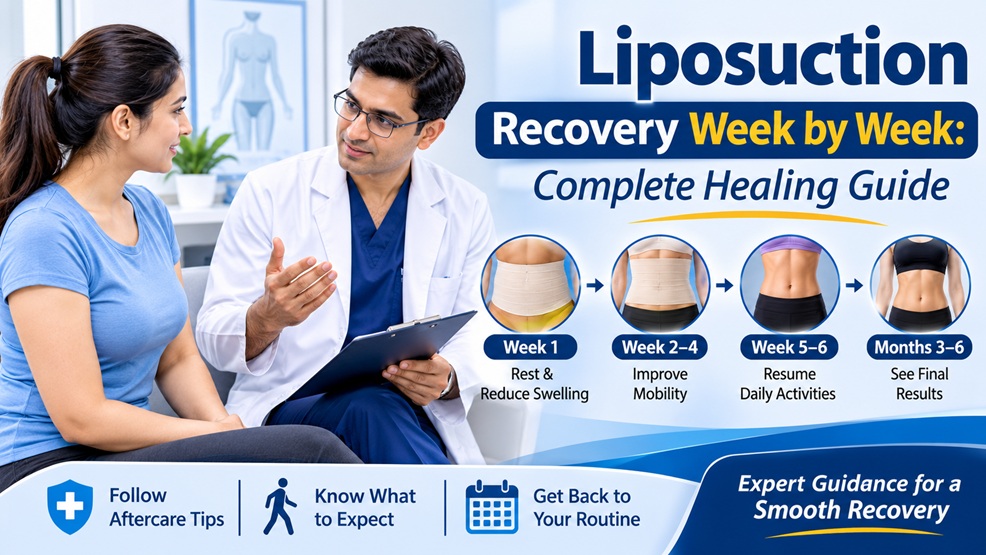
Liposuction Recovery Week by Week
Every patient heals differently. The following timeline provides a general overview of what may happen after liposuction surgery.
Week 1: Initial Healing and Swelling
The first week is an important stage of recovery. Patients may experience swelling, bruising, tenderness, and discomfort around the treated areas.
During this period:
Rest and avoid strenuous physical activity.
Wear the prescribed compression garment.
Take medications as instructed.
Follow the recommended wound-care routine.
Attend scheduled follow-up appointments.
Take short walks if permitted by your surgeon.
Some patients may experience fluid drainage from small incisions. This can be part of the normal healing process, but excessive bleeding or unusual discharge should be reported.
Week 2: Gradual Improvement
During the second week, bruising and discomfort may begin to improve. Swelling can still be noticeable, and the treated area may feel firm or sensitive.
Patients may gradually return to light daily activities if their surgeon approves.
Important recommendations include:
Continue wearing the compression garment as advised.
Avoid heavy lifting and strenuous exercise.
Keep incision areas clean according to instructions.
Avoid unnecessary pressure on treated areas.
Attend follow-up consultations.
The body is still healing, so visible swelling at this stage is not necessarily a sign of poor results.
Weeks 3–4: Improving Comfort and Mobility
By the third and fourth weeks, many patients experience improved comfort and mobility. Bruising generally continues to fade, although swelling may remain.
During this stage:
Continue prescribed aftercare.
Gradually increase light daily activities.
Follow your surgeon’s exercise restrictions.
Avoid intense workouts unless approved.
Monitor changes in swelling and skin sensation.
Some areas may feel firm, uneven, or slightly numb. These changes can take additional time to settle.
Weeks 5–6: Returning to More Activities
At around five to six weeks, many patients have recovered enough to consider returning to more physical activities.
However, the timing depends on the extent of surgery and individual healing.
Your surgeon may allow you to:
Increase walking duration.
Resume selected low-impact exercises.
Gradually return to regular routines.
Reduce compression garment use if advised.
Do not restart strenuous workouts simply because the initial swelling has improved. Follow your surgeon’s clearance.
Weeks 7–8: Continued Healing
During weeks seven and eight, swelling may continue to decrease, and body contours can become more noticeable.
Patients may experience improved comfort and better movement in the treated areas.
However, some residual swelling and firmness can remain. Continue attending follow-up visits and follow the recommended care routine.
Months 3–6: More Visible Results
Between three and six months, much of the swelling generally settles, allowing the treated contours to become clearer.
Skin adjustment and tissue healing continue during this period. The final appearance depends on skin elasticity, the treatment area, and individual healing.
Some patients may need additional time before their results fully develop.
What Affects Liposuction Recovery Time?
Liposuction recovery time is different for every patient. Several factors can influence how quickly the body heals.
1. Treatment Area
The recovery experience may vary depending on whether liposuction is performed on the abdomen, thighs, arms, back, hips, or chin.
The size and number of treated areas can influence swelling, discomfort, and activity restrictions.
2. Amount of Fat Removed
The extent of the procedure can affect recovery. Larger treatment areas or more extensive procedures may require additional healing time.
3. Surgical Technique
Different liposuction techniques involve different methods of fat removal. Your surgeon will select an appropriate approach based on your anatomy and treatment goals.
4. Overall Health
General health, nutritional status, smoking habits, and existing medical conditions can influence healing.
Patients should share their complete medical history with the surgeon before surgery.
5. Skin Elasticity
Skin elasticity affects how the skin adjusts to the new body contour after fat removal. The degree of skin tightening varies between individuals.
6. Post-Surgery Care
Following medical instructions, wearing compression garments as prescribed, maintaining wound hygiene, and attending follow-up visits can support recovery.
Important Liposuction Aftercare Tips
Proper aftercare is an essential part of healing after liposuction.
Wear Your Compression Garment
Your surgeon may recommend wearing a compression garment to help manage swelling and support the treated areas.
Wear it for the duration and schedule advised by your surgeon.
Maintain a Balanced Diet
A balanced diet containing protein, fruits, vegetables, and adequate fluids supports general health and recovery.
Avoid extreme dieting during the healing period.
Stay Gently Active
Short walks may be recommended to support circulation and reduce the risks associated with prolonged immobility.
Avoid strenuous activity until your surgeon gives permission.
Avoid Smoking
Smoking can interfere with healing and increase the risk of complications. Discuss smoking cessation with your medical team before surgery.
Attend Follow-Up Appointments
Follow-up visits allow the surgeon to assess healing, check incision sites, monitor swelling, and address any concerns.
When Can You Return to Normal Activities After Liposuction?
The return to normal activities depends on the treatment area, procedure extent, and recovery progress.
| Activity | General Recovery Guidance |
|---|---|
| Short walks | Often encouraged early, as advised |
| Light daily activities | Gradually within the first 1–2 weeks |
| Office work | Often within several days to 2 weeks |
| Driving | When comfortable, off sedating medicines and medically cleared |
| Light exercise | Often after 3–4 weeks, with approval |
| Heavy workouts | Commonly after 4–6 weeks or later, with approval |
These are general estimates, not fixed instructions. Your surgeon should determine when each activity is safe for you.
Warning Signs After Liposuction
Although swelling and bruising are common after surgery, certain symptoms require prompt medical attention.
Contact your surgeon if you experience:
Increasing or severe pain.
Fever or chills.
Increasing redness or warmth around incisions.
Pus or foul-smelling discharge.
Sudden or significant swelling.
Persistent or excessive bleeding.
Seek emergency medical attention for chest pain, sudden shortness of breath, fainting, or severe difficulty breathing.
Do not ignore unusual symptoms or delay seeking medical advice.
Frequently Asked Questions About Liposuction Recovery Week by Week
1. How long does liposuction recovery take?
Many patients resume light daily activities within several days to two weeks. More complete recovery and improvement in body contours can take several weeks to months.
2. When does swelling go down after liposuction?
Swelling is usually more noticeable during the early recovery period. It gradually decreases over several weeks, although some residual swelling may continue for three to six months or longer.
3. When can I return to work after liposuction?
Some patients return to desk-based work within several days to two weeks. Physically demanding jobs may require a longer recovery period.
4. How long should I wear a compression garment?
The duration varies according to the procedure and surgeon’s instructions. Many surgeons recommend wearing it for several weeks.
5. When can I exercise after liposuction?
Gentle walking may be encouraged early. More intense exercise should be resumed gradually and only after receiving approval from your surgeon.
6. Is it normal to feel hard areas after liposuction?
Some firmness, swelling, and temporary irregularities may occur during healing. However, painful or worsening lumps should be evaluated by your surgeon.
7. When will I see the final results of liposuction?
Initial improvements may become visible as swelling decreases. More defined results often develop over three to six months, although some patients take longer.
Conclusion
Understanding Liposuction Recovery Week by Week helps patients prepare for the healing process and maintain realistic expectations after body contouring surgery.
The first few weeks generally involve swelling, bruising, and gradual improvement in comfort. Over the following months, swelling continues to settle and the treated body contours become more visible.
Following medical instructions, wearing compression garments as prescribed, maintaining a balanced lifestyle, and attending follow-up appointments are important parts of recovery.
Consult Dr. Jagdeep Rao in Jaipur to discuss liposuction treatment, recovery expectations, and a personalised surgical plan.