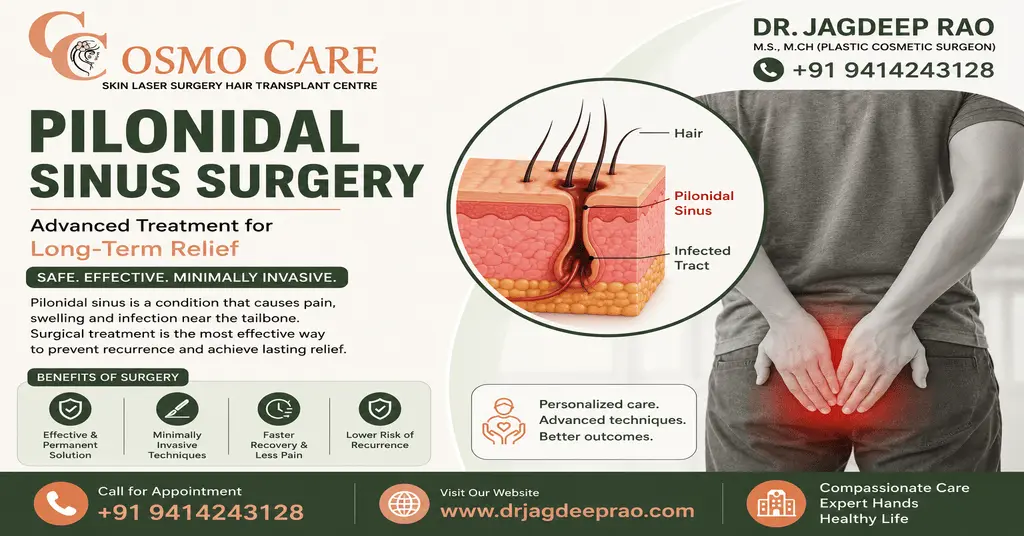
It is a numbing disorder that impacts the region close to the tailbone, typically located at the highest point of the buttocks. The most common cause is a tiny cyst or sinus tract, which becomes damaged due to hair trapped as well as debris and bacteria. If it is not addressed, the condition can result in chronic infections, swelling, drainage of pus, and severe discomfort. For patients looking for effective pilonidal sinus surgery in Kishangarh, advanced surgical treatment offers a safe and permanent solution.
With the guidance of experienced surgeons like Dr. Jagdeep Rao, the patients are able to benefit from modern treatments specifically designed to ease discomfort and shorten recovery times as well as reduce the likelihood of repeat surgery. Dr. Jagdeep Rao is an expert cosmetic and plastic surgeon who has extensive experience in numerous surgical procedures. This includes the treatment of pilonidal sinuses.
What is a pilonidal sinus?
The pilonidal sinus can be described as an insignificant cavity that develops under the skin close to the tailbone. It is usually due to hair growth issues as well as friction, sitting for long periods, sitting, sweating excessively, and inadequate hygiene. The hair that has been trapped triggers an inflammation, which leads to the creation of sinuses.
The condition is more frequent when it comes to the following:
- Young adults
- Sitting for prolonged time
- Overweight individuals
- Anyone with a family background of the pilonidal disorder
In the absence of proper treatment The sinus can develop infections, which can cause constant pain and discharge.
Common Symptoms of Pilonidal Sinus
People suffering from sinus pilonidal can experience
- Ailment near the tailbone
- Redness and swelling
- Pus and blood discharge
- Foul-smelling drainage
- The tenderness is felt when being seated
- The severity of the infection can be severe
- The formation of abscess recurrently
A timely diagnosis and treatment will reduce the risk of complications and increase results for recovery.
Causes of Pilonidal Sinus
Many factors influence the growth of pilonidal nasal sinus.
- Ingrown Hair: Skin hair that penetrates may cause inflammation and infected skin.
- Prolonged Sitting: The long hours spent sitting cause tension and friction within the area of the natal cleft.
- Excessive Hair Growth: Hairy people are more at risk.
- Obesity: Weight gain increases friction and sweating.
- Poor Hygiene: The accumulation of sweat and other debris could cause an increase in infection.
Why Surgery is Often the Best Treatment
While antibiotics are able to temporarily decrease infections, they cannot remove the sinus tract as a whole. The majority of sinus infections require surgery.
The advantages of surgery include:
- The sinus tract is removed permanently.
- Recurrence risk is reduced.
- Modern techniques for faster healing.
- Better quality of life.
- Pain relief and discharge.
Some specialists believe that surgery is the most efficient long-term treatment for chronic pilonidal sinus problems.
Advanced Pilonidal Sinus Surgery in Kishangarh
The latest surgical methods have dramatically increased the effectiveness of treatment. Based on the severity of the problem, the surgeon could suggest the following:
- Incision and Drainage: The procedure can be performed if the abscess has developed. The infected area is cleaned to reduce swelling and pain.
- Excision Surgery: The entire sinus tract as well as affected tissue is removed.
- Flap Procedures: Innovative flap techniques can help smooth the area affected and decrease the frequency of recurrence.
- Laser-Assisted Treatment: Laser technology provides a less invasive treatment that is less painful and faster-healing in certain instances.
The procedure chosen depends on the health of the patient as well as previous treatment options and degree of illness.
Why Choose Dr. Jagdeep Rao?
When considering pilonidal sinus surgery in Kishangarh, choosing an experienced surgeon is essential. Dr. Jagdeep Rao is recognized for his proficiency in cutting-edge surgical techniques and patient-centric care. His experience spans decades working in cosmetic and plastic as well as reconstructive surgery. He has been a major contributor in the field of surgery.
Some of the advantages are the following:
- Comprehensive evaluation.
- Individualized treatment plans.
- Advanced surgical techniques.
- Concentrate on reducing the frequency of recurrence.
- Modern medical infrastructure.
- Post-operatively, we provide specialized medical care.
As per the data available at his office, specific strategies for cases of recurrent pilonidal sinus were developed in order to improve the outcomes.
Recovery After Pilonidal Sinus Surgery
Time to heal varies according to the method used.
The general advice for patients is to
- Make sure the area is clean and dry.
- Be sure to follow the wound care recommendations carefully.
- Do not sit for too long initially.
- Be sure to maintain good hygiene.
- Take off any hair that is excessive around the region if instructed.
- Follow-up appointments should be scheduled.
The majority of patients will gradually return to regular activities in a couple of weeks.
Tips to Prevent Recurrence
Even after successful surgery, prevention remains important.
- Maintain Hygiene: A regular cleaning routine can reduce the likelihood of the spread of bacteria.
- Avoid Long Sitting Hours: Pause and move regularly.
- Weight Management: Being healthy and weight-bearing reduces the friction and sweating.
- Follow Medical Advice: Regular follow-ups ensure proper healing.
When Should You Consult a Surgeon?
It is recommended to seek medical attention in the event of:
- A persistent pain in the area of the tailbone.
- Swelling that is recurring.
- Pus discharge.
- Infections that are repeated.
- Problems sitting at a comfortable level.
The inability to recognize symptoms can cause chronic illness and even more extensive surgeries later on.
Frequently Asked Questions (FAQs)
Q. What’s the most effective treatment for the pilonidal sinus?
Ans. Surgery is usually considered to be the most efficient treatment option for chronic or recurring pilonidal sinus since it eliminates the sinus tract beneath.
Q. Does surgery to treat pilonidal sinuses cause pain?
Ans. The latest surgical methods and anesthesia aid in reducing discomfort during the procedure. The post-operative discomfort is typically controlled with prescription medications.
Q. What is the average time to recover?
Ans. The recovery process varies based on the procedure, but most patients can resume their normal routine in the space of a few weeks.
Q. Does the sinus of the pilonidal come back after the surgery?
Ans. It is possible to recur, but it can be significantly decreased when modern surgical methods as well as the correct postoperative care are adhered to.
Q. Is laser treatment available for pilonidal sinus?
Ans. Laser-assisted surgeries may be appropriate for a select group of patients. They can help patients recover faster and with less irritation.
Q. How often should I visit my doctor?
Ans. See a doctor if you are experiencing pain, swelling, discharge, or persistent inflammation near the tailbone.
Summary
The pilonidal sinus is a frequent, however potentially problematic, condition that could result in repeated inflammation, pain, and discomfort. While treatments for temporary discomfort may provide temporary relief, surgery is the best permanent solution. If you are searching for pilonidal sinus surgery in Kishangarh, advanced treatment options offered under the guidance of experienced specialists such as Dr. Jagdeep Rao can help you achieve lasting relief and an improved quality of life. An early diagnosis, expert surgery, and the proper post-operative care are essential to a successful treatment as well as the avoidance of the recurrence of it.