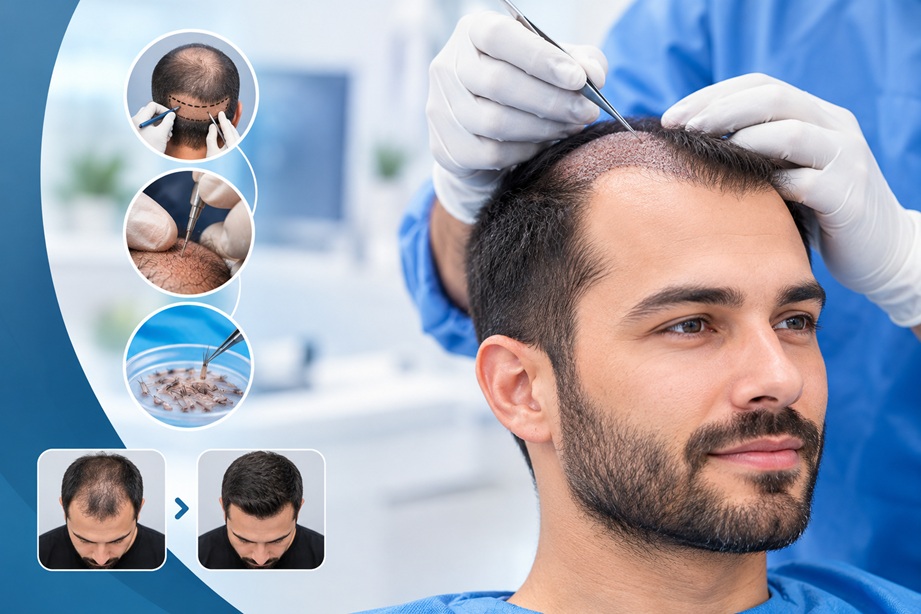
A hair transplant is a surgical procedure that moves hair follicles from a donor area of the scalp to areas affected by hair loss. While the procedure is an important step in hair restoration, understanding the recovery process is equally important.
If you are considering a hair transplant in Jaipur, knowing what to expect after surgery can help you prepare for the healing period and understand how hair growth develops over time.
At Cosmo Care Clinic, Dr. Jagdeep Rao provides hair transplant treatment in Jaipur. Every patient’s recovery experience can differ depending on the surgical technique, scalp condition, number of grafts, and individual healing response.
In this guide, we explain the hair transplant recovery timeline, aftercare recommendations, expected hair growth, and when to contact your doctor.
What Happens After a Hair Transplant?
After hair transplant surgery, the scalp needs time to heal around the transplanted follicles. Mild redness, tenderness, swelling, and small crusts around the treated areas may occur during the initial recovery period.
The transplanted hair shafts may shed during the following weeks. This is commonly known as shock shedding and does not necessarily mean the transplant has failed. New hair growth usually develops gradually over the following months.
Following your surgeon’s instructions is important for protecting the transplanted area and supporting recovery.
Hair Transplant Recovery Timeline: Week by Week
Days 1–3: Initial Healing
During the first few days, the scalp may feel tender, and small crusts can develop around the transplanted grafts. Some patients also experience mild swelling or redness.
Aftercare tips:
- Follow your surgeon’s instructions for scalp cleaning and washing.
- Avoid rubbing, scratching, or picking at the transplanted area.
- Sleep in the position recommended by your medical team.
- Take prescribed medication exactly as directed.
- Contact your clinic if you notice unusual or worsening symptoms.
Avoid applying oils, styling products, or unapproved treatments to the scalp during the early healing period.
Days 4–7: Scalp Care and Healing
During the first week, crusts may remain visible around the transplanted follicles. The scalp may gradually become more comfortable, although healing varies between individuals.
Your surgeon will advise you when and how to wash your scalp safely. Do not try to remove crusts by force.
Important care recommendations:
- Wash your scalp only as instructed.
- Avoid scratching or rubbing the treated areas.
- Protect your scalp from direct sunlight according to your doctor’s guidance.
- Avoid strenuous physical activity until your surgeon says it is safe.
Week 2: Continued Recovery
By the second week, many patients notice that redness and crusting have reduced. Some temporary sensitivity or numbness may persist.
The transplanted hair may begin shedding around this stage or over the following weeks. This can be an expected part of the hair growth cycle.
If redness, swelling, or discomfort is increasing rather than improving, contact your treating clinic for assessment.
Weeks 3–6: Temporary Hair Shedding
During this phase, some or much of the visible transplanted hair may shed. This can be concerning if you expect immediate visible growth, but shedding of the hair shafts is common after transplantation.
The transplanted follicles may remain in the scalp even when the visible hair sheds. However, individual outcomes vary, and shedding alone cannot confirm whether a transplant has succeeded.
Continue following your aftercare instructions and attend recommended follow-up appointments.
Months 2–3: The Early Growth Phase
During the second and third months, visible growth may still be limited. Some patients notice early new hairs, while others may need more time.
New hair can initially appear fine, soft, or uneven. The rate of growth differs from person to person.
Be patient during this stage and consult your surgeon before starting any additional hair-growth medication or treatment.
Months 4–6: Gradual Visible Growth
Between months four and six, many patients begin noticing more visible hair growth. The transplanted hairs may gradually become longer and more noticeable.
Growth is not always uniform across the scalp, and the final density cannot usually be judged at this stage.
Your doctor may assess the progress during follow-up appointments and advise whether any additional care is needed.
Months 6–9: Continued Improvement
During this period, hair growth may become more noticeable as additional follicles enter the growth phase. The hair may also begin to look thicker as individual strands mature.
Results vary depending on the patient’s donor hair, hair-loss pattern, surgical planning, and healing response.
Keep attending follow-up visits so your surgeon can evaluate your progress.
Months 9–12 and Beyond: Assessing Results
Many patients can assess substantial improvement by around 9–12 months. In some cases, particularly depending on the treatment area and individual growth cycle, further maturation may continue beyond this period.
Your surgeon can evaluate hair growth, density, and the overall appearance of the transplanted area to help determine the outcome.
A hair transplant does not stop the natural progression of hair loss in untreated areas. Your doctor may discuss long-term hair management where appropriate.
How Long Does It Take to Recover From a Hair Transplant?
The early healing period often takes around one to two weeks, although visible redness and other minor symptoms can last longer in some patients.
Returning to work and normal activities depends on the type of work, the procedure performed, and your surgeon’s advice. Strenuous exercise and activities that could injure the scalp may need to be avoided for longer.
It is helpful to distinguish between three stages:
- Initial healing: The scalp begins recovering during the first days and weeks.
- Early hair growth: New visible growth may begin over the following months.
- Result maturation: Hair growth and appearance continue to develop over a longer period.
Your surgeon will provide guidance based on your individual procedure and recovery.
Essential Hair Transplant Aftercare Tips
Proper aftercare helps protect the scalp while it heals. Follow the instructions provided by your treating surgeon rather than relying on general advice alone.
1. Follow the Recommended Washing Routine
Your clinic will explain when to begin washing your scalp and which technique to use. Avoid forceful rubbing, hot water, or strong water pressure on the treated area until permitted.
2. Avoid Scratching or Picking
Small crusts can develop during healing. Picking at them may irritate the scalp and interfere with recovery. Allow them to clear according to your surgeon’s instructions.
3. Protect Your Scalp
Follow your doctor’s guidance on sunlight exposure, hats, helmets, and other headwear. Avoid anything that presses against or rubs the transplanted area before it is safe to do so.
4. Return to Exercise Gradually
Your surgeon will advise when it is appropriate to resume walking, gym workouts, sports, and other physical activities. Avoid strenuous exercise until you receive clearance.
5. Maintain a Balanced Diet
A balanced diet containing adequate protein, vitamins, minerals, and other essential nutrients supports general health and normal hair growth. Supplements should be used only when appropriate, particularly if a deficiency has been identified.
6. Attend Follow-Up Appointments
Follow-up visits allow your medical team to monitor healing and assess hair growth. Ask your surgeon before using minoxidil, finasteride, or any other medication after the procedure.
FUE Hair Transplant Recovery
Follicular Unit Extraction (FUE) is a hair transplant technique in which individual follicular units are removed from a donor area and placed in areas requiring restoration.
FUE does not usually involve a long linear incision, but it still involves surgery and requires proper aftercare. Small extraction marks can occur in the donor area, and healing time varies.
The recovery experience depends on the number of grafts, the surgical plan, the patient’s health, and adherence to post-operative instructions.
A consultation can help determine whether FUE or another approach is suitable for your hair-loss pattern and donor hair.
Signs You Should Contact Your Doctor
Some mild redness, tenderness, or crusting can occur after hair transplant surgery. However, certain symptoms require prompt medical assessment.
Contact your surgeon if you experience:
- Increasing or severe pain.
- Spreading redness or worsening swelling.
- Pus or unusual discharge.
- Fever or feeling generally unwell.
- Persistent bleeding or any other symptom that concerns you.
Seek urgent medical care if you experience a severe or rapidly worsening reaction. Do not try to treat possible complications with unprescribed medication.
When Should You Judge Your Hair Transplant Results?
It is usually too early to judge the final outcome during the first few weeks because temporary shedding can occur and new growth takes time.
Many patients begin seeing more visible changes over the following months, with substantial results often assessed around 9–12 months or later.
Your final outcome depends on several factors, including:
- The quality and availability of donor hair.
- The pattern and progression of hair loss.
- The number and distribution of transplanted grafts.
- The surgical technique and planning.
- Individual healing and hair-growth characteristics.
- Appropriate aftercare and follow-up.
A qualified surgeon can explain realistic expectations based on your specific condition.
Hair Transplant in Jaipur: Consultation With Dr. Jagdeep Rao
Choosing a hair transplant surgeon involves reviewing medical qualifications, surgical experience, treatment planning, safety standards, and follow-up care.
Dr. Jagdeep Rao is a plastic and cosmetic surgeon associated with Cosmo Care Clinic in Jaipur. His clinic provides hair transplant services and information about treatment options for people considering hair restoration.
During a consultation, you can discuss your hair-loss pattern, donor area, suitability for surgery, expected recovery, possible risks, and the likely treatment cost.
A personalized assessment is important because a hair transplant is not suitable for every type of hair loss.
Frequently Asked Questions About Hair Transplant Recovery
1. How many days does hair transplant recovery take?
Initial scalp healing often takes around one to two weeks, although individual recovery varies. Hair growth and the development of visible results take several months.
2. When does transplanted hair start growing?
New visible growth often begins over the following months, commonly around months three to four, although the timing varies. More noticeable growth may develop between months four and six.
3. Is hair shedding normal after a transplant?
Temporary shedding of transplanted hair shafts is common during the weeks after surgery. It does not necessarily mean that the procedure has failed. Contact your surgeon if you have concerns about your recovery.
4. When can I return to work after a hair transplant?
Some people return to desk-based work within a few days, while others prefer more time depending on redness, swelling, discomfort, and the nature of their job. Follow your surgeon’s specific advice.
5. Can I exercise after a hair transplant?
Strenuous exercise may need to be avoided during the early recovery period. The appropriate time to resume exercise depends on your procedure and healing, so follow your surgeon’s instructions.
6. When can I see the final hair transplant results?
Many patients assess substantial results around 9–12 months, but further maturation may take longer. The timeline varies according to the individual and treatment area.
7. Does a hair transplant stop future hair loss?
A transplant restores hair to selected areas but does not necessarily prevent existing, untreated hair from thinning. Your doctor can discuss suitable long-term hair management options.
Book a Hair Transplant Consultation in Jaipur
Understanding the hair transplant recovery timeline can help you prepare for each stage of healing and set realistic expectations for hair growth.
If you are considering a hair transplant in Jaipur, arrange a consultation to discuss your suitability, treatment options, recovery requirements, and expected results.