Rhinoplasty, commonly known as nose reshaping surgery, is a procedure that changes the shape or structure of the nose. It may be performed for cosmetic reasons, to address certain structural problems, or to improve nasal function when appropriate.
If you are considering rhinoplasty in Jaipur, understanding the recovery process can help you prepare for surgery and follow the right aftercare routine. Healing takes time, and the recovery experience varies depending on the surgical technique, the extent of correction, and individual factors.
What Is Rhinoplasty Recovery Like?
Recovery after rhinoplasty is gradual. Swelling, bruising around the nose or eyes, mild discomfort, and temporary nasal congestion may occur after surgery.
The initial healing period is usually shorter than the time needed for all swelling to settle. Your surgeon will explain what to expect based on your procedure and medical history.
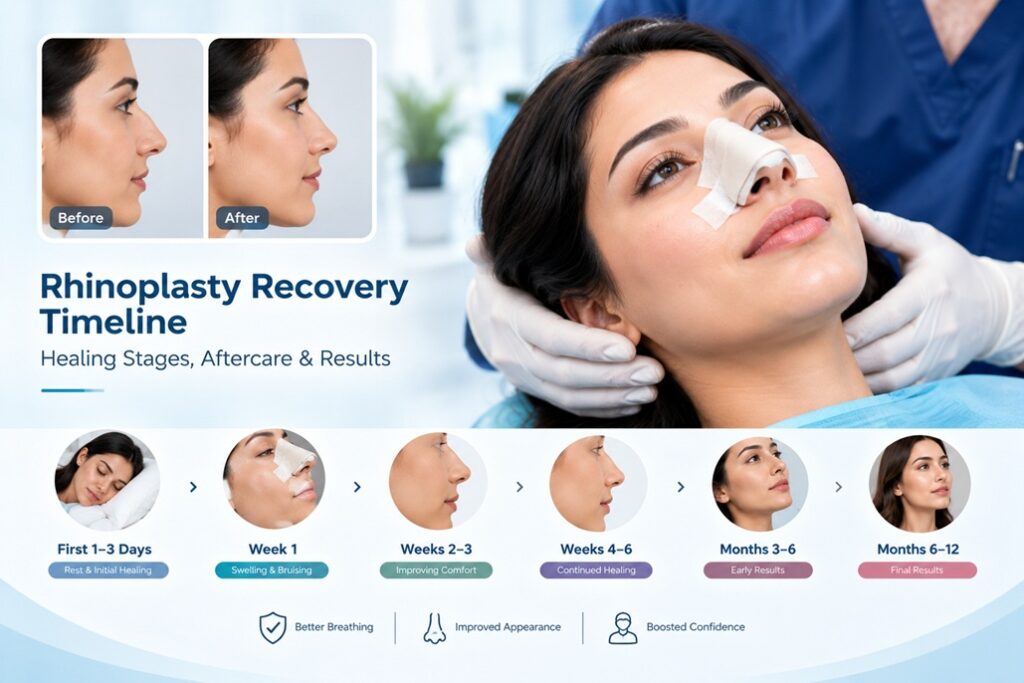
Rhinoplasty Recovery Timeline: Week by Week
First 24–72 Hours After Surgery
The first few days are focused on rest and following your surgeon’s instructions.
You may experience:
- Swelling around the nose and cheeks.
- Bruising around the eyes.
- Nasal congestion or difficulty breathing through the nose.
- Mild discomfort or pressure.
Keep your head elevated as instructed, avoid unnecessary exertion, and take prescribed medicines according to your surgeon’s directions. Do not blow your nose unless your medical team has advised that it is safe.
First Week After Rhinoplasty
During the first week, swelling and bruising may remain noticeable but often begin to improve. A nasal splint or dressing may be used to support the nose while it heals.
Your surgeon will determine when the splint can be removed and whether you need a follow-up appointment earlier than scheduled.
Avoid putting pressure on your nose, strenuous activity, and any activity that could accidentally injure the surgical area.
Weeks Two to Three
Many patients find that visible bruising has substantially improved by this stage. Some people may be able to return to school, work, or other everyday activities, depending on their healing and their surgeon’s advice.
The nose may still look swollen, and the shape seen at this stage should not be considered the final result.
Weeks Four to Six
Healing continues, and swelling gradually decreases. Your surgeon may allow you to resume selected physical activities as recovery progresses.
Avoid contact sports, activities that could cause an impact to the nose, and strenuous exercise until your surgeon clears you.
Three to Six Months After Rhinoplasty
The nose’s appearance continues to change as deeper tissues heal. Swelling, particularly around the nasal tip, can persist for several months.
Follow-up appointments allow your surgeon to assess healing and answer questions about the developing result.
Up to One Year or Longer
Subtle changes may continue for a year or sometimes longer, especially after more complex procedures. The final appearance depends on the surgical technique, tissue characteristics, and individual healing.
Your surgeon is best placed to explain the likely timeline for your particular procedure.
Important Rhinoplasty Aftercare Tips
Following your post-operative instructions can support recovery and help reduce avoidable complications.
1. Follow Your Surgeon’s Instructions
Use prescribed medicines and care for dressings exactly as directed. Do not change medication or wound-care routines without consulting your medical team.
2. Protect Your Nose
Avoid pressure on the nose and take care when changing clothes or washing your face. Ask your surgeon when it is safe to wear glasses that rest on the nose.
3. Avoid Strenuous Activities
Heavy lifting, intense workouts, and activities with a risk of facial impact should be avoided until your surgeon confirms that you can resume them.
4. Attend Follow-Up Appointments
Follow-up visits help your surgeon monitor swelling, check healing, and identify potential complications.
5. Be Patient With the Results
Swelling can make the nose appear uneven or different from the expected outcome during early recovery. Do not judge the final result too soon; discuss concerns with your surgeon during follow-up.
What Symptoms Require Medical Attention?
Some swelling and bruising are expected after rhinoplasty, but certain symptoms should not be ignored.
Contact your surgical team promptly if you experience increasing pain, fever, spreading redness, unusual discharge, or worsening symptoms. Seek urgent medical attention for severe breathing difficulty, heavy bleeding, or sudden changes in vision.
Do not wait for a routine follow-up if symptoms are severe or rapidly worsening.
What Factors Affect Rhinoplasty Recovery Time?
Recovery can differ from one patient to another. Important factors include:
- Type of procedure: Primary rhinoplasty and revision rhinoplasty may have different recovery requirements.
- Extent of correction: More complex changes may involve a longer healing period.
- Individual healing: Swelling and bruising resolve at different rates.
- Aftercare: Following medical instructions helps protect the surgical area.
- Overall health: Your medical history and any relevant health conditions may influence recovery.
Your surgeon can provide a more personalised recovery plan after examining your nose and discussing your treatment goals.
Rhinoplasty Surgery in Jaipur with Dr. Jagdeep Rao
People considering rhinoplasty in Jaipur can consult Dr. Jagdeep Rao at Cosmo Care Clinic to discuss nasal concerns, available surgical approaches, expected recovery, and possible risks.
Dr. Jagdeep Rao’s official website lists his qualifications in plastic and cosmetic surgery. During a consultation, patients can discuss their medical history and expectations and learn which treatment options may be appropriate for them.
Learn more about the procedure on the Rhinoplasty Surgery in Jaipur service page.
Clinic Address: Cosmo Care Clinic, 44-A, Grenade Marg, Behind Perfect Diagnostic, Khatipura Road, Vaishali Nagar, Jaipur, Rajasthan – 302021.
Phone: +91 94142 43128
Frequently Asked Questions About Rhinoplasty Recovery
1. How long does rhinoplasty recovery take?
Initial recovery often takes around one to two weeks, although this varies by patient and procedure. Swelling may continue to settle for several months, and subtle changes can last a year or longer.
2. When can I return to work or school after rhinoplasty?
Some patients return within one to two weeks, depending on their healing and the nature of their daily activities. Follow your surgeon’s advice, particularly if your routine involves physical exertion.
3. When can I exercise after rhinoplasty?
Light activity and strenuous exercise have different recovery requirements. Resume exercise only according to your surgeon’s instructions, and avoid activities that could injure the nose until medically cleared.
4. Is swelling normal after rhinoplasty?
Yes. Swelling is a common part of healing. It generally improves gradually, but some swelling—particularly around the nasal tip—may remain for several months.
5. Can rhinoplasty improve breathing?
Rhinoplasty may address certain structural problems affecting nasal airflow. Whether it can improve breathing depends on the cause, and some patients may require a specific functional procedure.
6. Are rhinoplasty results permanent?
Rhinoplasty can produce long-lasting structural changes. However, healing, ageing, injury, and other factors can influence the nose over time. Results cannot be guaranteed, and individual outcomes vary.
Conclusion
Understanding the rhinoplasty recovery timeline helps patients prepare for the healing process and make informed decisions about treatment. Although many people resume routine activities within a few weeks, complete healing and the settling of swelling take longer.
If you are considering rhinoplasty in Jaipur, consult Dr. Jagdeep Rao to discuss your goals, recovery expectations, aftercare requirements, and the potential benefits and risks of surgery.
Medical disclaimer: This article is for general educational purposes only and does not replace an individual medical consultation. Treatment decisions should be made with a qualified healthcare professional.